


- Home Page
- Company Profile
-
Our Products
- PTFE Sheets
- PTFE Molded Sheet
- 3 mm PTFE Expanded Sheet
- White PTFE Skived Sheet
- 6 Mm PTFE Sheet
- 1000 Mm PTFE Skived Sheet
- 600 Mm PTFE Skived Sheet
- 1200 Mm PTFE Sheet
- 600 Mm Skived PTFE Sheet
- 450 Mm PTFE Skived Sheet
- 300 Mm PTFE Molded Sheet
- 5 Mm Expanded PTFE Sheet
- 450 Mm PTFE Sheet
- Expanded PTFE Sheet
- White Expanded PTFE Sheet
- 3 Mm Thick PTFE Sheet
- PTFE Sheet
- PTFE Sheet 6mm
- PTFE Sheet 8mm
- PCTFE SHEET
- PVDF Sheet
- PFA Sheet
- FEP Sheet
- PTFE Bushes
- PTFE Rods
- PTFE Tubes
- PTFE Gaskets
- PTFE Machined Components
- PTFE Plate
- PTFE Washers
- PTFE Ball
- PTFE Bellow
- Turcite Sheet Roll
- PTFE Seals
- PTFE Bar
- PTFE Skived Sheet
- Teflon Sheets
- Teflon Rods
- PTFE O Ring
- Bridge Bearing Pads
- PEEK Rod
- PEEK Products
- PTFE Sheets
- Extra Links
- Contact Us
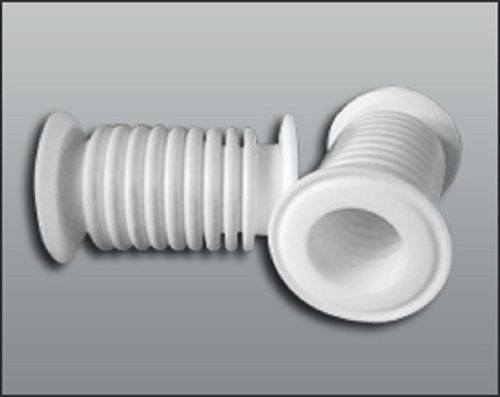
PTFE Bellow
900 INR/Kilograms
Product Details:
- Head Code Round
- Media Acids, Chemicals, Gases
- Surface Treatment Virgin Smooth PTFE Finish
- Max. Temperature Up to 250C
- Flange PTFE Lined Carbon Steel / Stainless Steel
- Material PTFE (Polytetrafluoroethylene)
- Technique Moulded / Machined / Welded
- Click to View more
X
PTFE Bellow Price And Quantity
- 10 , , Kilograms
- 900 INR/Kilograms
PTFE Bellow Product Specifications
- Cylindrical with convolutions
- PTFE (Polytetrafluoroethylene)
- Expansion Bellow / Flexible Bellow
- PTFE Lined Carbon Steel / Stainless Steel
- Flanged / Plain
- Moulded / Machined / Welded
- Up to 10 kg/cm
- Up to 250C
- Virgin Smooth PTFE Finish
- Round
- Acids, Chemicals, Gases
- Excellent against almost all chemicals
- 100% leak proof when properly installed
- Pipeline Vibration Absorption, Misalignment Compensation
- Available up to PN16
- Full Face or Stub End
- White (Natural PTFE)
- 25mm to 500mm
- Single or Multi-ply
- High Temperature, Corrosive Environments
- ASTM / DIN / IS compliant
- Available as per client requirement
PTFE Bellow Trade Information
- 10 , , Kilograms Per Day
- 1-2 Week
- Yes
- Contact us for information regarding our sample policy
- All India
Product Description
Made from top grade polytetrafluoroethylene material, our offered PTFE Bellow is known for its chemical resistance and high performance efficiency. It is extensively used in numerous machines for protecting their moving parts from dust or dirt. In addition to this, the said product absorbs vibrations and also corrects axial shafts. Polytetrafluoroethylene Bellow helps the reciprocating shafts to move in a hassle free manner. Furthermore, this equipment comes in white color under the brand name STP and provides high density up to 2.0 2.2 gm/cm3. It is integrated with various attributes such as light weight, compact size, fine finishing, easy installation and dimensional accuracy.
PTFE Bellow Advantages:
- Widely installed in carbon steel piping
- Requires low maintenance and highly efficient
- Has longer service life and sturdy construction
- Provides high strength and anti-corrosive nature
PTFE Bellow Technical Details:
- Color : White
- Brand : STP
- Style : PTFE Bellow Seal
- Material : PTFE, Virgin PTFE
- Density : 2.0 - 2.2 gm/cm3
- Tensile Strength : 210 - 350 Kg/cm2
Superior Chemical Resistance for Demanding Applications
Our PTFE bellows are meticulously engineered to perform exceptionally in corrosive environments, making them ideal for pipelines handling acids, chemicals, and aggressive gases. The virgin PTFE construction confers excellent resistance to virtually all chemicals, safeguarding piping systems against leaks and degradation even at high temperatures or pressures.
Versatile Design and Installation Options
Offered in both expansion and flexible types with cylindrical convolutions, these bellows are available in either single or multi-ply configurations. Multiple connection possibilitiesflanged, plain, full face, or stub endensure seamless integration with a variety of pipeline setups. PTFE lined carbon steel or stainless steel flanges further reinforce durability and chemical compatibility.
Customizable and Standards-Compliant Solutions
We provide extensive customization in bellows length and configuration to match unique project specifications. Our manufacturing process aligns with stringent ASTM, DIN, and IS standards, and techniques such as moulding, machining, and welding assure consistent quality. Each product undergoes careful surface treatment, resulting in a smooth, leak-proof finish.
FAQs of PTFE Bellow:
Q: How do PTFE bellows help in pipeline vibration absorption and misalignment compensation?
A: PTFE bellows are specifically designed with convoluted cylindrical shapes that allow them to flex and absorb vibrations. This flexibility also accommodates pipe misalignments, thermal expansion, and system movements, helping to protect pipelines from stress and potential leaks.Q: What are the main benefits of using PTFE bellows compared to other materials?
A: PTFE bellows offer exceptional resistance to almost all chemicals, withstand high temperatures up to 250C, and are suitable for corrosive environments. Their non-reactive properties and leak-proof design ensure longevity and reduce maintenance needs, even under demanding operating conditions.Q: When should length customization be requested for PTFE bellows?
A: Length customization should be considered when pipeline layouts, vibration levels, or system movements require specific bellow dimensions for optimal performance. Customization ensures a precise fit and maximum efficiency in compensating for misalignment or thermal expansion.Q: Where are PTFE bellows typically installed?
A: These bellows are installed in pipelines exposed to aggressive media such as acids, chemicals, and gases. Industries including chemical processing, pharmaceuticals, and water treatment plants commonly use them to enhance reliability and safety in their fluid handling systems.Q: What installation process ensures a 100% leak-proof PTFE bellow joint?
A: To achieve leak-proof performance, proper alignment, correct torque during flange bolting, and the use of compatible gaskets are essential. Following the manufacturers installation guidelines and selecting full face or stub end joints as appropriate will help ensure reliable operation.Q: How does compliance with ASTM, DIN, and IS standards benefit end-users?
A: Compliance with these standards assures users of consistent quality, safety, and compatibility with various international pipeline systems. It also facilitates easy integration, replacement, and adherence to regulatory requirements in both domestic and export markets.Tell us about your requirement

Price:
Quantity
Select Unit
- 50
- 100
- 200
- 250
- 500
- 1000+
Additional detail
Mobile number
Email


Contact Details

- 119, Lalit Warehouse, Narol-Sarkhej Highway, Narol, Ahmedabad - 382405, Gujarat, India
- Phone :08037737009
- Mr Ronak M Mehta (Partner)
- Mobile :08037737009
- Send Inquiry
SANGHVI TECHNO PRODUCTS
GST : 24AAJFS9777M1Z8
GST : 24AAJFS9777M1Z8
 Send Inquiry

|


 |
SANGHVI TECHNO PRODUCTS
All Rights Reserved.(Terms of Use) Developed and Managed by Infocom Network Private Limited. |
