


- Home Page
- Company Profile
-
Our Products
- PTFE Sheets
- PTFE Molded Sheet
- 3 mm PTFE Expanded Sheet
- White PTFE Skived Sheet
- 6 Mm PTFE Sheet
- 1000 Mm PTFE Skived Sheet
- 600 Mm PTFE Skived Sheet
- 1200 Mm PTFE Sheet
- 600 Mm Skived PTFE Sheet
- 450 Mm PTFE Skived Sheet
- 300 Mm PTFE Molded Sheet
- 5 Mm Expanded PTFE Sheet
- 450 Mm PTFE Sheet
- Expanded PTFE Sheet
- White Expanded PTFE Sheet
- 3 Mm Thick PTFE Sheet
- PTFE Sheet
- PTFE Sheet 6mm
- PTFE Sheet 8mm
- PCTFE SHEET
- PVDF Sheet
- PFA Sheet
- FEP Sheet
- PTFE Bushes
- PTFE Rods
- PTFE Tubes
- PTFE Gaskets
- PTFE Machined Components
- PTFE Plate
- PTFE Washers
- PTFE Ball
- PTFE Bellow
- Turcite Sheet Roll
- PTFE Seals
- PTFE Bar
- PTFE Skived Sheet
- Teflon Sheets
- Teflon Rods
- PTFE O Ring
- Bridge Bearing Pads
- PEEK Rod
- PEEK Products
- PTFE Sheets
- Extra Links
- Contact Us
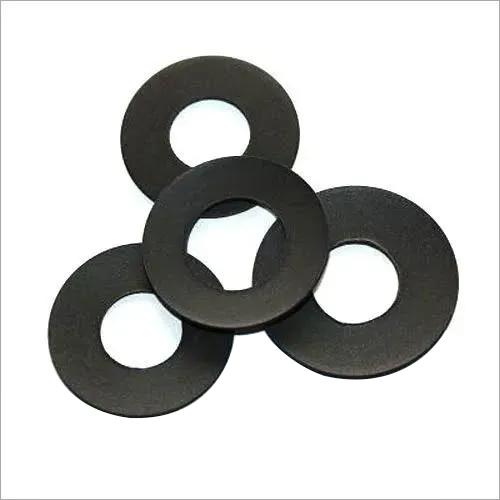
Carbon Filled PTFE Gasket
750 INR/Kilograms
Product Details:
- Gasket Coefficient 0.12 - 0.16
- Pressure Resistance Up to 100 bar
- Standard ASTM F104, DIN, IS, or as per customer requirement
- Temperature Resistance Up to 260C
- Hardness 60-65 Shore D
- Medium Suitable for acids, alkalis, solvents, steam and water
- Vaccum Range To 1x10 Torr
- Click to View more
X
Carbon Filled PTFE Gasket Price And Quantity
- 10 Kilograms
- 700.00 - 800.00 INR/Kilograms
- 750 INR/Kilograms
Carbon Filled PTFE Gasket Product Specifications
- Round / Ring / As per drawing
- Carbon Filled PTFE (Polytetrafluoroethylene with carbon filler)
- 0.12 - 0.16
- Optional, Stainless steel or as specified
- Standard and customized sizes available
- ASTM F104, DIN, IS, or as per customer requirement
- Up to 260C
- Up to 100 bar
- -200C to +260C
- 1 mm to 10 mm
- To 1x10 Torr
- Chemical processing, Petrochemical, Food and pharmaceutical industries, Steam and hydrocarbon services
- 60-65 Shore D
- Suitable for acids, alkalis, solvents, steam and water
- Optional, Stainless steel or as specified
- Improved over virgin PTFE, anti-static properties
- Black (due to carbon content)
- Low
- 12 weeks after order confirmation
- Smooth, non-porous
- Excellent with most chemicals except molten alkali metals and fluorine
- Molded or machined from filled PTFE sheets or rods
- 2.10 2.20 g/cm
Carbon Filled PTFE Gasket Trade Information
- 10 Kilograms Per Day
- 1-2 Week
- Yes
- Contact us for information regarding our sample policy
- All India
Product Description
By following the cutting edge techniques with the utilization of finest grade PTFE and carbon as raw materials we are providing the best grade of Carbon Filled PTFE Gasket. Offered product comes in the size range of 12.5 to 400 mm. It has the ability to withstand the harsh environmental conditions, which enables it to finds its applications in number of industrial sectors. This black color mechanical seal is known to fill the space between two or more mating surfaces. This grade of Carbon Filled PTFE Gasket finds its applications in multiple industrial sectors, varying from Pharmaceuticals, Chemical Processing, Rail-Tank Car to Pulp and Paper.
Features:
- It is known for having the excellent mechanical and wear properties
- It provides low permeability
- It is used for anti-static applications
- It retains its frictional properties.
Product Details:
- Product Name : Carbon Filled PTFE Gasket
- Size : 12.5 to 400 mm
- Brand : STP
- Material : PTFE
- Style : Sealing
Specification
| Usage/Application | Mechanical Seal |
| Size | 12.5 to 400 mm |
| Brand | STP |
| Shape | Round |
| Temperature | 250 deg C |
| Style | Sealing |
| Density | 2.1 gm/cm3 |
| Color | Black |
| Material | Carbon + PTFE |
Superior Chemical and Thermal Resistance
Engineered to perform reliably under aggressive conditions, Carbon Filled PTFE Gaskets provide outstanding resistance to a vast array of chemicals and solvents. Their thermal stability makes them suitable for applications with fluctuating temperatures, ensuring lasting performance in demanding industrial environments.
Versatile Applications and Customization
These gaskets are used extensively in chemical, petrochemical, food, and pharmaceutical industries for sealing in steam, hydrocarbon, acid, alkali, and water systems. They can be supplied in standard or custom sizes and shapes, with optional stainless steel inner and outer rings, based on detailed customer specifications or drawings.
Enhanced Mechanical and Electrical Properties
Added carbon filler improves the PTFEs mechanical strength, electrical conductivity, and anti-static behavior. This makes the gaskets more durable, with a low compression set and smooth, non-porous finish, crucial for both safety and operational efficiency in sensitive or hazardous environments.
FAQs of Carbon Filled PTFE Gasket:
Q: How does the addition of carbon filler benefit PTFE gaskets?
A: Carbon filler enhances both the mechanical strength and electrical conductivity of PTFE, resulting in improved anti-static properties, reduced compression set, and increased durability for demanding applications.Q: What process is used to manufacture Carbon Filled PTFE Gaskets?
A: These gaskets are produced either by molding or precision machining from carbon-filled PTFE sheets or rods, ensuring high dimensional stability and a smooth, non-porous surface finish.Q: When should I opt for a Carbon Filled PTFE Gasket over standard PTFE gaskets?
A: Choose Carbon Filled PTFE Gaskets when applications require superior chemical resistance, improved anti-static performance, and higher durability, especially in environments with exposure to steam, hydrocarbons, or fluctuating temperatures.Q: Where are Carbon Filled PTFE Gaskets typically used?
A: They are widely employed in chemical processing units, petrochemical plants, food and pharmaceutical facilities, and any setting where robust sealing against aggressive chemicals or extreme temperatures and pressures is required.Q: What is the lead time for delivery of these gaskets, and are custom sizes available?
A: Standard lead time is 12 weeks after order confirmation, and both standard and fully customized sizes and shapes can be supplied as per customer requirements.Q: How resistant are these gaskets to temperature and chemicals?
A: They withstand temperatures from -200C up to +260C and are compatible with most chemicals except molten alkali metals and fluorine, ensuring long-lasting sealing under harsh conditions.Q: What are the usage benefits of the smooth, non-porous surface finish?
A: A smooth, non-porous surface minimizes leakage risks, resists contamination buildup, and ensures ease of cleaningkey advantages for hygienic applications like food and pharmaceutical processing.Tell us about your requirement

Price:
Quantity
Select Unit
- 50
- 100
- 200
- 250
- 500
- 1000+
Additional detail
Mobile number
Email

Other Products in 'PTFE Gaskets' category


Contact Details

- 119, Lalit Warehouse, Narol-Sarkhej Highway, Narol, Ahmedabad - 382405, Gujarat, India
- Phone :08037737009
- Mr Ronak M Mehta (Partner)
- Mobile :08037737009
- Send Inquiry
SANGHVI TECHNO PRODUCTS
GST : 24AAJFS9777M1Z8
GST : 24AAJFS9777M1Z8
 Send Inquiry

|


 |
SANGHVI TECHNO PRODUCTS
All Rights Reserved.(Terms of Use) Developed and Managed by Infocom Network Private Limited. |
